Automatic vs. Manual Transfer Switch — Which One Fits Your St. Louis Setup?
A whole-home standby generator is always paired with an automatic transfer switch, which flips your panel to generator power within seconds of an outage with no one home. A portable generator uses a manual transfer switch or interlock kit instead — cheaper, but it requires someone to start the unit and throw the switch by hand.
Every generator install in St. Louis County needs some form of transfer switch — running an extension cord into the house or backfeeding through a dryer outlet isn't just against code, it's a real hazard to utility line workers repairing the grid. The choice isn't whether to install one, it's which type fits the generator you're running.
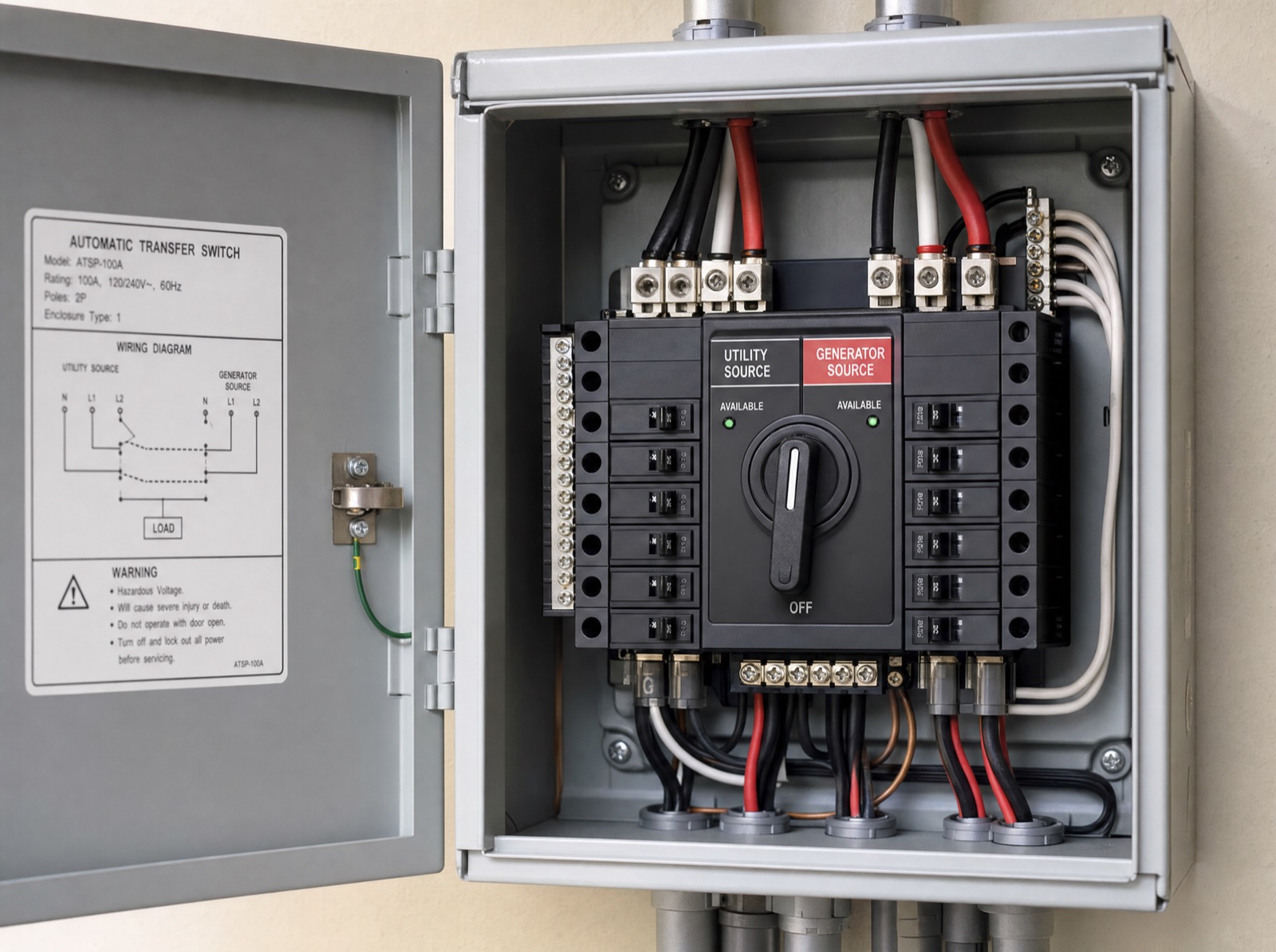
Automatic vs. Manual — What Actually Differs
| Factor | Automatic Transfer Switch (ATS) | Manual Transfer Switch / Interlock |
|---|---|---|
| Switchover | Senses outage, starts generator, switches load — no one home needed | Person must start the generator and flip breakers by hand |
| Paired generator type | Whole-home standby (natural gas or propane) | Portable gas or propane generator |
| Typical installed cost | $1,800-$4,500 | $600-$1,800 |
| Coverage during outage | Whole home or a pre-selected large circuit panel | Selected essential circuits only, chosen when you flip breakers |
| Best fit | Homeowners who travel, are away during the day, or want zero action required | Budget-conscious homeowners home to operate it when the power goes out |
Why the Switch Matters More Than the Generator
A generator with no listed transfer switch — someone running extension cords through windows, or backfeeding through a 220V outlet — can push power backward onto the utility grid through your home's service line. A lineman working to restore power downstream has no way of knowing your generator is energizing what should be a dead line. That's the safety reason a transfer switch or interlock device isn't optional under the National Electrical Code, independent of which type you choose.
Go Automatic If
You're installing a whole-home standby generator, travel often, or want zero manual steps during a storm outage.
Go Manual/Interlock If
You already own or plan to buy a portable generator and will be home to operate it when the power goes out.
If you're leaning toward a whole-home system, see our whole-home generator page and the sizing guide to pick a kW target first. If you already have a portable unit, our portable generator hookup page covers interlock kit installation, and the full scope of ATS wiring is on our transfer switch installation page.
Transfer Switch FAQ
What is the difference between an automatic and manual transfer switch?
An automatic transfer switch senses a utility outage and switches your home to generator power within seconds without anyone touching a switch, while a manual transfer switch requires a person to flip breakers by hand after starting the generator.
Is it legal to run a generator into my house without any transfer switch?
No — connecting a generator directly into household wiring without a transfer switch or listed interlock device creates a backfeed hazard that can electrocute utility line workers and is a National Electrical Code violation that most St. Louis County inspectors will flag on any generator-related permit.
Do whole-home standby generators always use an automatic transfer switch?
Yes — a whole-home standby generator is paired with an automatic transfer switch by design, since the entire point of a standby system is switching over without anyone home to do it manually.
How much more does an automatic transfer switch cost than manual?
A manual transfer switch or interlock kit for a portable generator typically installs for $600-$1,800, while an automatic transfer switch sized for a whole-home standby generator runs $1,800-$4,500 installed, largely driven by amperage rating and panel complexity.
Codes & Standards
Transfer switch and interlock installations are governed by NFPA 70 (National Electrical Code) Article 702 (Optional Standby Systems), with placement and panel access reviewed against the ICC International Residential Code.